How Is a U.S. Real Estate Agent Different From a Property Agent in China?
As I put it in a 2018 video, there are three main differences. The U.S. has open, networked listing systems, and agents handle the whole transaction. U.S. agents must be licensed, trained and take continuing education, and serious violations can cost them the license. Buyer and seller usually each have their own agent. What I say about agents in China is my personal observation from that time.
Watch the original video on YouTube
I talked about this between sessions of a continuing education class
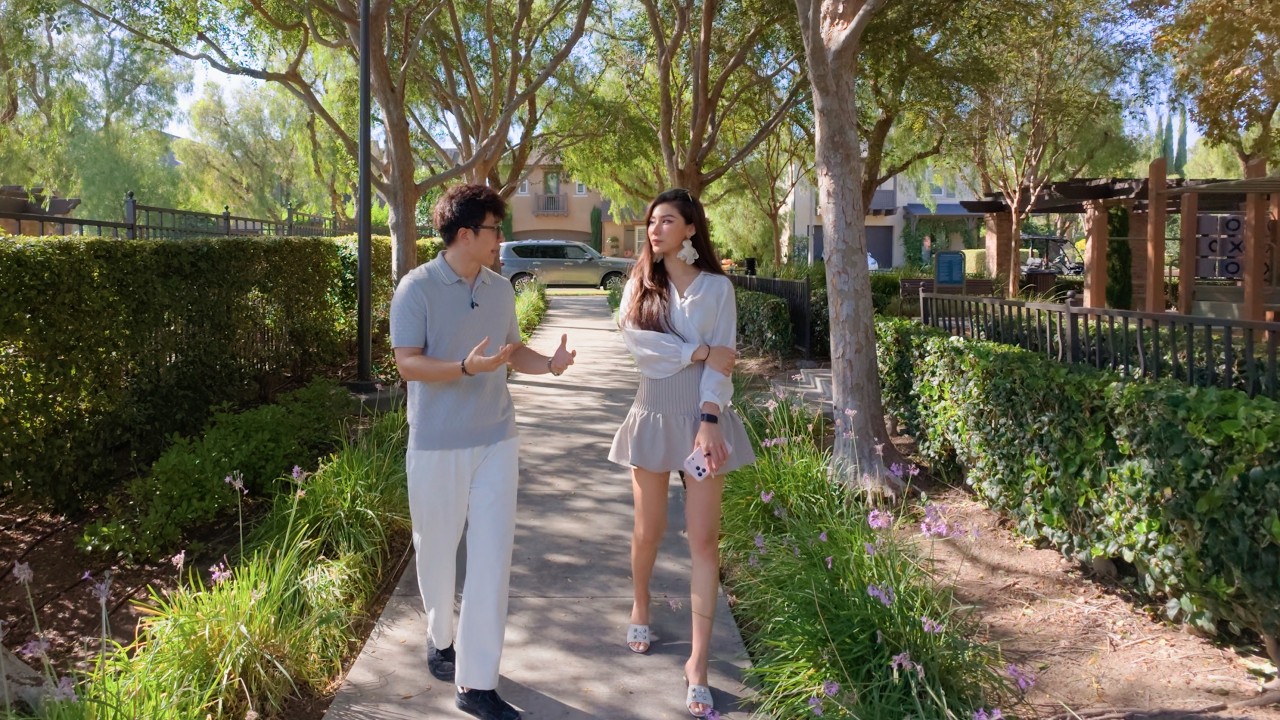
One day in July 2018 I decided at the last minute to attend a continuing education class at a real estate school. Before class, during the break and afterward, I recorded a few segments on a question viewers often ask: how is a real estate agent in the U.S. different from a property agent in China?
One thing first. I work as an agent in the United States. What follows about agents in China comes from my own observation and from what I had heard, and in the video I said I was not sure about some of it. Please read it as my personal view in 2018.
Exchanging information versus handling the whole transaction
My sense is that a property agent in China mostly provides an information exchange, connecting people who want to sell with people who want to buy. A real estate agent in the U.S. provides service across the whole transaction. I think that is an important difference between the two.
The reason behind it: an open, networked listing system
One reason for that difference is the listing system. As I understood it then, China did not have a transparent, networked listing system that anyone could search freely, and there was no nationwide database of listings. A seller would more often go to a classifieds site or the website of one of the larger agencies and post the information there.
The U.S. does have such systems, and each state has its own. Many commercial real estate websites also pull data from the agents' listing systems, so nearly every home for sale in the country shows up online.
The data on those websites lags a little. A home may already be sold in the agents' system while the website still shows it as for sale.
The U.S. data is also richer. You can see the year a home was built, its size, the details of the lot, and the price at each past sale.
Licensing, training and continuing education
To me the biggest difference between working as a property agent in China and as a real estate agent in the U.S. is the qualification requirement. In the U.S. you have to pass a licensing exam and go through rigorous training, and after you are licensed you still have to take continuing education. The class I attended that day was one of those.
The U.S. is a federal country, and the states differ a great deal. The example I gave in the video: in California you pass one exam and you can get the license, while in Hawaii you take two, one federal and one for the state of Hawaii. Each state has its own constitution and the power to make its own laws as long as they do not conflict with the U.S. Constitution. So states have their own particular rules, and one state does things one way while another does them differently.
By comparison, my impression is that the way property agencies operate is much the same across China, without that kind of state-by-state variation.
Standards of conduct, and losing the license
Licensed agents in the U.S., not without exception but for the most part, have been through strict training. During that training an agent is told which conduct is correct, which conduct is encouraged, and which conduct is prohibited or even illegal.
So I think that, on the whole, U.S. agents who have had that training are better placed to give good service to clients who are buying or selling property.
The U.S. also has real estate commissions that oversee agents. For certain violations, an agent can have the license revoked.
From what I had seen at the time, agents in China often lacked that kind of constraint. There was no full set of conduct standards and no comparable body overseeing them. I see that as a large difference between the two.
Buyer and seller each have an agent
What I had heard is that in a sale in China, the agent may try to keep the seller and the buyer from exchanging contact details, so that the two do not cut the agent out of the deal.
That problem does not come up in the U.S. In general, the buyer and the seller each have an agent representing them. The agent's duty is to look after the interests of the side they represent throughout the transaction.
As a buyer's agent, for example, I protect the buyer and make sure the buyer is not harmed at any point in the process. Some situations I guard against: the money has been paid and the buyer does not get the home; title does not transfer; the home has a major defect or problem. The seller's agent protects the seller in the same way.
So U.S. agents do not try to keep the two sides apart. If anything, buyers and sellers seldom contact each other directly. They prefer to communicate through their agents, and they listen to their agents' advice. Buying or selling a home in the U.S. is a specialized matter that involves legal, financial and tax questions.
Who pays the commission: what I said in 2018
I had heard that in China both the buyer and the seller pay the agency a fee. I also said in the video that I was not sure that was accurate.
About the U.S., this is what I said in the 2018 video. Usually the commission on a sale is paid by the seller. The seller pays the commission, and it is divided between the brokerages on the two sides. Each brokerage then pays its own agent according to that company's internal split.
That was the explanation in 2018. For current practice, see the editor's note at the end.
What a continuing education class covers: one example from that day
The class that day covered a legal rule. As the instructor explained it, when the sellers are a married couple in the middle of divorce proceedings, neither spouse may dispose of the property alone. They may not transfer it, sell it or give it away, which means neither one can carry out a real estate transaction unilaterally.
When a new law comes out, continuing education updates licensed agents so that everyone handles transactions under the current rules. That is what it is for.
My view at the time
At the end of the video I said China still had a lot it could do in this area: legislation first, then industry standards. The gap is mainly in those systemic things.
I was not saying China is bad. I was describing, as objectively as I could, the differences I had seen.
Editor's note
This video was made in July 2018. The statements about property agents in China are Fei Li's personal observations and hearsay from that time. They are not a complete description of the industry in China and do not describe the situation today.
The statements about who pays the commission in the U.S. and how it is divided are from the 2018 video. U.S. commission practice went through a rule change in 2024. Today the arrangement is governed by the agreements the buyer and the seller each sign with their own agents.
The points about state licensing exams, continuing education and disposing of property during a divorce are brief explanations from the video. The state regulator and current law control. This article is not legal, tax or lending advice.
FAQ
Is the listing data on commercial real estate websites the same as in the agents' system?
It comes from the same source, with a slight lag. As I said in the video, a home may already be sold in the agents' system while the website still shows it as for sale.
Do buyers and sellers in the U.S. contact each other directly?
Usually not. Each side normally has its own agent, and both sides prefer to communicate through the agents because the transaction involves legal, financial and tax matters.
Does a U.S. real estate agent keep studying after getting licensed?
Yes. Licensed agents take continuing education, and new legal rules are covered in class. The specific requirements vary by state.