How I Read the Southern California Housing Market in 2020–2022 (A Look Back, Part 1)
This is a record, not advice about today's market. I have lined up 15 of my videos on the Southern California market, from November 2020 to December 2022, in date order: what was happening, what I thought, and what I told buyers and sellers. The calls are left as I made them, right or wrong.
Watch the original video on YouTube
How to read this
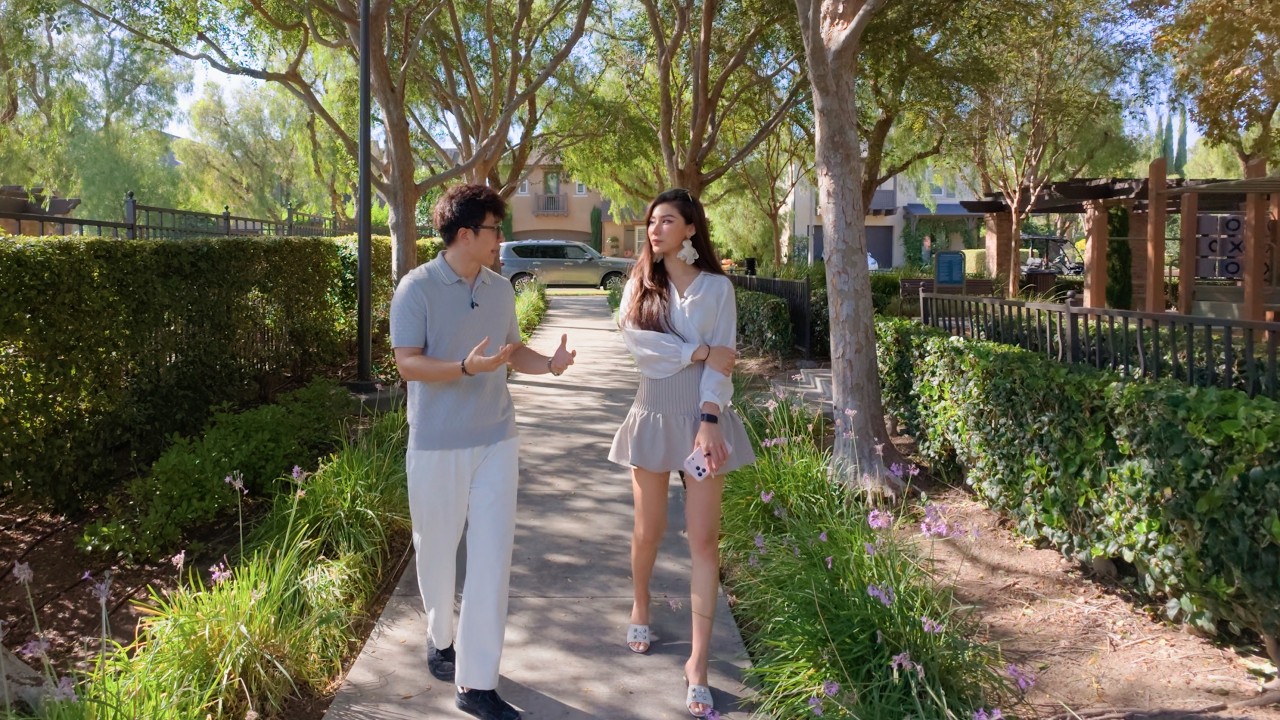
The video embedded above is from January 2021. The other videos are grouped below into five periods. Each call is labeled with the month I made it. Every rate, price and inventory number is what I said out loud in that month's video, and none has been replaced with later data. Each section ends with an "Actual figures" line: Irvine median sale prices and active listings pulled from InfoSparks by an editor, for comparison. This article stops at the end of 2022. Later years are covered in Part 2.
Late 2020 to early 2021: bidding wars during the pandemic
In November 2020, I told homeowners at the end of a video that there were very few listings, that rates were "the lowest in 60 years," and that the number of listings was down nearly 40% from the year before. If you had a home to sell, I said, this was the best time.
In December 2020, I explained why the market was rising instead of falling. I gave three reasons. Families were stuck at home and needed more space, so people traded up and moved from city centers to the suburbs. Rates were at a record low. And people who might have sold did not want strangers walking through their homes, so fewer homes were for sale. More buyers and fewer sellers meant higher prices. See the December 2020 video: the December 2020 vlog.
In January 2021, I said work had been "not going well" because we kept losing homes for our buyers. We lost when we offered over asking and when we offered full price, and some homes took an offer after one day on the market. An agent in another state told me one listing there drew 27 offers. I gave three causes. First, listings were down 40% year over year. I put it as "last year there were 100 homes on the market, today there are 60." Second, rates were the lowest in 60 years, so young renters found they could afford a payment and became first-time buyers. Third, the government was sending out cash, with a $1.9 trillion stimulus plan to follow, and with more money around, real estate holds value.
My call at the time: this was "an absolute seller's market." To anyone thinking of selling, I said it was "the highest prices in Southern California history and the strongest seller's market." In the same video I said I was not trying to talk anyone into buying or selling, only describing the market as it was. See the January 2021 video: 为什么疫情这么严重 美国房地产市场却这么火爆?!看完这集视频你就会明白 | VLOG²º²¹.
Spring and summer 2021: over-asking became normal, and I said "it will keep rising"
In April 2021, I used my own move to describe the market. I paid over asking for my own home, and I did not even win it on the first try. The rate on my new loan was 2.375%. I borrowed more than on my previous home, yet the monthly payment was lower, and a much smaller share of it was interest. Most of the homes we were selling closed above asking.
My call at the time: this was the hottest market, but I did not think it would last. Once people were vaccinated and sellers felt safe, more homes would be listed and the market would not be this hot. I also said "prices will not necessarily drop." My advice was that owners who wanted to sell should sell now and not wait, and that buyers who found a home they really liked should buy it and not worry about an extra ten or twenty thousand dollars.
In July 2021, many viewers asked whether the market was cooling. My answer was that more listings was a fact, but fewer buyers was not, and that many homes were still selling over asking. I thought the wave of pandemic-driven move-up buying was mostly done, but that entry-level and mid-range homes would stay hot as long as rates stayed low, and that the luxury market had not started rising yet and would come later. A viewer commented that six months had passed and prices were still rising. I replied, "It will keep rising. Come back in a year and this video will still hold." My line for everyone was: do not sell unless you have to, and if you need to buy, buy soon. I also said, "You never buy at the wrong time. You can only sell at the wrong time."
In August 2021, I looked at the data and for the first time agreed the market was cooling. The Irvine numbers I read out were: 356 new listings, down 23.1%; 421 active listings, down about 50%; pending sales down 3.4% in Irvine and about 22% in Orange County; 341 closed sales, up 11.7%; 7 days on market on average; 1.4 months of supply; median and average sales prices both up nearly 20%, with the median above $1 million for the first time, compared with what I described as roughly $700,000 to $800,000 before; and sales closing at 102.5% of original list price on average.
My reading was that falling pending sales meant fewer buyers were committing, because there was too little to buy and because prices had risen beyond what buyers could follow. But I said prices would not fall and would keep going up unless one of two things happened: supply rising above four or even six months, or interest rates going up. I also expected homes to take longer to sell. My advice was that it was still a good time for sellers. Buyers should generally still expect to pay over asking, but should check whether the list price was reasonable, and could negotiate on homes that were clearly overpriced.
Fall and winter 2021: the market starts to turn, and I told buyers with loans not to wait
In October 2021, I reviewed the previous four weeks of data and said the market had moved from a frantic seller's market toward a more balanced one, and might move toward a buyer's market next. I pointed to two signs. There were early signs of rate increases. And some banks had lowered down payment requirements from 20% to 10% or even 5%, which I took to mean the banks had also noticed the market loosening.
My call at the time: there was no sign that prices would rise the following year the way they had over the past year, and no sign that they would fall. Most likely prices would stay fairly stable over the next year or two. But there were clear signs that rates would go up. So my advice was that cash buyers could wait, and buyers who needed a loan should not, because even if prices adjusted, the monthly payment and total cost could be higher once rates rose. To people who had already bought with cash, I said there was no need for regret, and that they could consider taking out a loan against the home and reinvesting the money. See the October 2021 video: 房地产市场转向 到底该买还是等?!| VLOG²º²¹.
In December 2021, answering viewer comments, I said that over the past year prices in some local areas had risen "30 to 40 percent, even 40 to 50 percent," for the same reasons as before: low inventory, people moving to bigger homes, a weaker currency and low rates. To viewers who felt it was too expensive to buy now, my answer was that neither the seller nor the agent decides what a home is worth. The buyer who is willing to pay decides. See the December 2021 video: 今天来聊聊大家的留言评论 | VLOG²º²¹.
First half of 2022: the market cooled, and I said cooling is not the same as falling prices
In April 2022, our team discussed the market at our weekly meeting. My colleagues' observations were that it was still a seller's market, but buyers were bidding more rationally than two or three months earlier, there were more listings, and homes were staying on the market longer. Buyers backing out after going under contract, and homes coming back on the market, had become common. We did not think the market would crash the way it did in 2008 and 2009. Our reasons were that lending standards were strict, appraisals were conservative, and this time it was general inflation, not a housing bubble. We said the market would cool and move sideways, that negotiating power would return to normal, and that "an adjustment does not mean prices will drop."
The same video said the market was splitting. Popular neighborhoods still saw over-asking offers, while areas with real drawbacks had already returned to more rational prices. The advice was that sellers waiting for one more jump should stop waiting, that buyers who needed a home in a strong school district did not need to wait, and that people hoping to flip quickly should hold off. I added that higher rates would slow the rise of entry-level and mid-range homes, and would matter less to high-end buyers who do not rely on loans. See the April 2022 video: 最近的房地产市场动态如何 有松动迹象?!| VLOG²º²² #TeamThursday.
In May 2022, I said the past two weeks had brought a big change. We used to go through 100 pairs of shoe covers at an open house weekend, and the weekend before we used fewer than 30. But I kept repeating that "cooling and price cuts are two different things." A $2 million home could basically still sell for $2 million. It just took longer: two days before, and now two weeks to two months. Most of the price cuts people were seeing were homes that had been listed too high coming back to market value. In my words, "only the asking price dropped." A real price drop is when a home worth $1 million is forced to sell at $800,000 or $900,000. I also said rate increases were not over, that I expected another one in mid-June, and that the market would cool further. My advice to sellers was to list at a reasonable price. See the May 2022 video: 房市要变天了吗!为什么这么多房子降价?| VLOG²º²².
In June 2022, I passed along seven points that an industry trainer made. Days on market were up sharply (he said his own area went from 4 days two months earlier, to 8 days three weeks earlier, to 29 days at that point). More listings were expiring unsold. Each home was getting far fewer offers. List price reductions were back. Mortgage rates would keep rising (the 30-year fixed was around 5.5% then, and he guessed it could reach 7% within the year). First-time buyers were leaving in large numbers. And pandemic relocation buyers were gone.
What I added myself was that we were seeing asking prices come down, and had not yet seen sold prices come down, because a normal 30 to 60 day transaction cycle had not finished. I said, "the next step may be that we see sold prices fall." I also said that rising rates affect lower and mid-priced homes more. My advice was that buyers who had to buy and needed a loan should not pass on a home that fit, so they would not end up with "high prices and high rates" later. Sellers needed to accept that the frantic seller's market was over and list at market value. And once the market was back in balance, who represents you as a seller matters much more than before. See the June 2022 video: the June 2022 vlog.
Second half of 2022: I said no crash, and by year-end I said prices were about to stabilize
In August 2022, I gave one reason I did not expect a crash: most sellers were under no pressure to sell. I said that in 2008 many owners had put very little down and walked away when prices fell, whereas now "homeowners across the country have more than 50% equity in their homes." If they could not get their price, they could rent the home out, so listings would not surge. My call was that prices might pull back a little from the peak, but hoping for a 30 to 40 percent drop to pick up a bargain was not realistic.
On timing, I said the best time to sell had been "the end of last year and the start of this year." I said I could not be fully sure about the next six months to a year. About the long term I spoke very confidently, saying that if you hold for three, five or ten years "you will definitely make money." I still considered it a good time to sell, because supply was below the pre-pandemic level. I put it as "400 homes for sale now, versus 800 before the pandemic." My advice to sellers was to take advantage of the still-low supply, but to stop expecting a price above market value. See the August 2022 video: 我认为南加房地产不会崩盘 这是其中一个原因 | VLOG²º²².
In October 2022, in a conversation with an agent from Texas, I looked back at the curve. Prices started climbing slowly from March 2020. In our area they peaked in April and May 2022 and turned in June, and it felt like it happened "overnight." I said prices in our area had risen about 40% since the pandemic began, and that "this 40% will not fully come back down." My forecast was that the market would be quiet from then to year-end, which gave buyers a chance to negotiate, and that local buyers would become active again in spring, joined by overseas buyers if flights resumed. See the October 2022 video: Dylan这次真的对我们失望了 只怪我工作太努力 | VLOG²º²².
In November 2022, I said many people were pessimistic about the market and that I was preparing to go the other way. I had opened a home equity line of credit (HELOC) so I could act if a good opportunity came up in the slow season before year-end. I said, "When others are fearful, be a little greedy." I also said that although the market had cooled, supply was still short, and a truly good home that was well prepared would still sell. See the November 2022 video: 逆向思维 别人恐惧的时候我们要贪婪 | VLOG²º²².
In December 2022, I said the six months of falling prices and low sales volume since May were behind us and that prices were about to stabilize. I first made clear that I was only talking about the Southern California market around Irvine, that it should not be applied to the whole country, and that even Northern California was very different. I gave four reasons. One, prices had already adjusted. I said they had risen 40 to 50 percent on average over the previous two years, that the pullback over the past six months was "at least 20%," and that some new homes in Great Park were back to pre-pandemic prices. Two, the Federal Reserve had signaled that large rate hikes were unlikely, rates were at 5% to 6%, and newer buyers were less sensitive to rates. Three, supply. I said Irvine had only a little over 130 new listings in November, the lowest November since 2008, and that many owners who could not get their price were pulling their listings and renting the homes out. Four, overseas buyers were coming back.
My advice was that buyers should act between March and June of the following year at the latest, and that owners in no hurry to sell could wait until after March. My words were, "the market will definitely have a run-up." At the end of the video I again said this was not meant to push anyone to buy or sell. See the December 2022 video: 南橙县房市即将回稳 Here's why | VLOG²º²².
Editor's note
Every rate, price, inventory figure and percentage in this article is what was said in the videos between November 2020 and December 2022. The article was prepared from machine-generated transcripts, and the figures were not checked one by one against the MLS or other data sources. What actually happened is shown in the "Actual figures" line at the end of each section. The text does not judge the calls in hindsight.
Words such as "definitely" and "will not" reflect Fei Li's personal views at the time and are not a guarantee of any outcome. Rates, lending terms and supply and demand are all different today. This article is not advice on buying or selling in the current market, and it is not investment, lending, tax or legal advice.
FAQ
Is this article advice on buying or selling now?
No. It only records what I said in my videos from 2020 to 2022. Whether to buy or sell today depends on current rates, current supply and your own situation.
Do these calls apply to other cities?
Not necessarily. In my December 2022 video I said I was talking about the Southern California market around Irvine, that markets differ a great deal, and that the points should not be applied directly elsewhere.