What Working as a Real Estate Agent in the U.S. Is Really Like: Who It Suits, Career Paths, and the Hard Parts
Working as a real estate agent in the United States means no base salary, a low bar to get in, a hard time staying in, income that moves with the market, and hours that are flexible but not free. It suits people who can accept all of that and want a career with a high ceiling and many directions to grow. It does not suit people who want steady pay and a clear end to the workday. This article combines what I said in five videos from 2021 to 2026, for people who are considering the business or have just started.
Watch the original video on YouTube
Who is suited to this work
This section comes from the main video at the top of this article: 什么样的人适合做地产经纪?| VLOG¹¹¹⁷ (2023-10-05, in Chinese).
In October 2023 I made two videos back to back. The first day covered the downsides of this business and the second day the upsides. I ended with one question: what kind of person is suited to being a real estate agent? My method is to go through the downsides and the upsides and ask yourself two things. Can I accept these downsides? Are these upsides what I want?
There are four downsides, covered in the next section. Here is what they require of a person.
- Drive. With no base salary, this work suits people who want to earn through commissions, who cannot sit still, and who are always thinking up the next idea. If you want a fixed paycheck, a phone you can switch off after work, and a quiet life, this business is not for you.
- Self-discipline. You work for yourself. Nobody is watching, and the work still has to get done.
- Constant learning. The bar is low and there are many agents, so you have to keep taking in new skills, new technology, and changes in the market, then adjust. I tell my team that change is normal. I think you should make a fairly big adjustment or upgrade about every three years.
- A cushion. The market moves in cycles and getting started takes time, so you need savings or another source of income. Before you start, ask yourself: if I close nothing in my first year and have no income for a year, can I accept that? Can my family support me?
I named three upsides. First, once you are established, the income is good. It comes at a price, and the price is the list of downsides above. Entering the business does not make your income high. If you would rather work at an ordinary pace for an ordinary income, do not go into this business.
Second, a sense of accomplishment. For many people, buying or selling a home is the largest transaction of their lives, and the client relies on you heavily. Being needed and recognized is a reward beyond the commission. Many clients have become friends, and some past clients have joined my team. When the relationship changes, you have to judge how to handle it. That is part of this work.
Third, a high ceiling and many directions, which I come back to in the section on career paths.
If you can accept every downside and the upsides are what you are looking for, this business suits you. If not, my advice is not to try it casually. Some people quit a full-time job to do this, find it does not work, and go back. That costs real time and money.
The reality of the income: four downsides
See also this video: 都说做地产经纪好赚,是真的吗?| VLOG¹¹¹⁶ (2023-10-04, in Chinese).
First, nothing is guaranteed. I consider this the biggest downside: no base salary, and effort does not always pay off. The closing announcements agents post on social media show only the part that succeeded. As I said in the video, more than ninety percent of the rest of the time ends with no result: you showed homes, drove around many times, wrote offers, and did not win the house. You have income only when a deal closes and the commission is paid. Before that, you earn nothing.
Second, it is easy to get in and hard to stay. Unlike doctors, lawyers, or pharmacists, agents do not need long professional training, so a great many people enter, especially in California. Add the lack of a base salary and the dropout rate is very high. In the 2023 video I said that many new licensees leave within the first year or two, and only a small share last the first four years to their license renewal. Getting in is easy. Surviving and getting started is hard.
Third, the market cycle hits hard. In the two years of low interest rates, many people bought, many were willing to sell, volume was high, and business was easier for everyone. After rates began rising in 2022, owners with low-rate loans did not want to sell, new buyers facing high rates did not want to buy, and volume fell sharply. In 2023, when I made this video, agents were not the only ones having a hard time. Lending, appraisal, and home repair were all down as well. This is not a secure job for life.
Fourth, the hours are flexible but not free. Some people enter the business because they have children and want more control over their time. It is true that we have no fixed hours and no commute. But if you want to be a diligent, professional, attentive agent, you have to respond when clients contact you, ask questions, or want to see a home. Saturday and Sunday, when other people rest, are when clients have time for showings, and we hold open houses too. Those are an agent's busiest days. When people ask how many hours a day I work, my answer is that I am working whenever I am awake.
Career paths once you are established
See also this video: 在美国做地产经纪有哪几种发展模式?| VLOG²º²¹ (2021-11-23, in Chinese).
These are five directions I talked through casually in a 2021 video. They describe where agents go once their volume is large, and the list is not complete.
- One agent doing the deals, with a small support team. You personally represent the buyer or seller in every transaction. Scheduling, showings, client relations, design, and publishing, the things that do not require you, go to others. It suits people who do not want to manage many relationships and like to be in control. This model usually only pays for itself in a very high-priced market, and it is entirely active income. When you stop, the income stops.
- Becoming a broker and running a company. You bring in other agents and receive a share of the commission on their transactions. You can open a franchise of a national brand, such as Keller Williams, where I work, or open an independent brokerage. A big brand has more developed training and support, so recruiting agents is relatively easier, but that does not mean it will always grow larger than an independent firm. In this model most of the income comes from other people's transactions, yet many problems still land on you, and the responsibility is heavy.
- Leading a team inside a brokerage. This is what I do. On a team member's transaction, part goes to the company and part to the team leader. The company's operating costs, liability, and disputes are handled by the broker above me and the attorneys. My job is mainly to teach my team how to do the work. If a team member closes while I am on vacation, I still receive a share. In 2021, though, most of my income still came from my own transactions.
- From flipping houses to small-scale building. Through their work, agents come across homes in poor condition that the seller will let go at a low price. Some agents buy them, renovate, and resell, and over time move on to buying land, building, and developing. This path means dealing with many parties: architects, designers, the city, contractors.
- Teaching and coaching. You turn your methods into courses or a membership program, and charge tuition or a monthly fee. A finished course posted online is closer to passive income. I knew it could be done, but it was not where my interest was at the time.
In the 2023 main video I added that some agents move into investing, project work, or commercial real estate. For someone new, there is a different decision to make first: work solo or join a team. Each has its advantages.
Skills, part one: long-term clients without social media
See also this video: 地产经纪不做自媒体也能年销过亿的秘籍 | VLOG¹¹⁰² (2023-09-17, in Chinese).
First, the general requirements. In the main video a colleague and I talked about how this work tests your all-around ability, and you need to know something about many areas. You have to know the market, handle the transaction process, prepare documents, write offers, negotiate, think like someone running a business, communicate and coordinate, and solve problems when they come up.
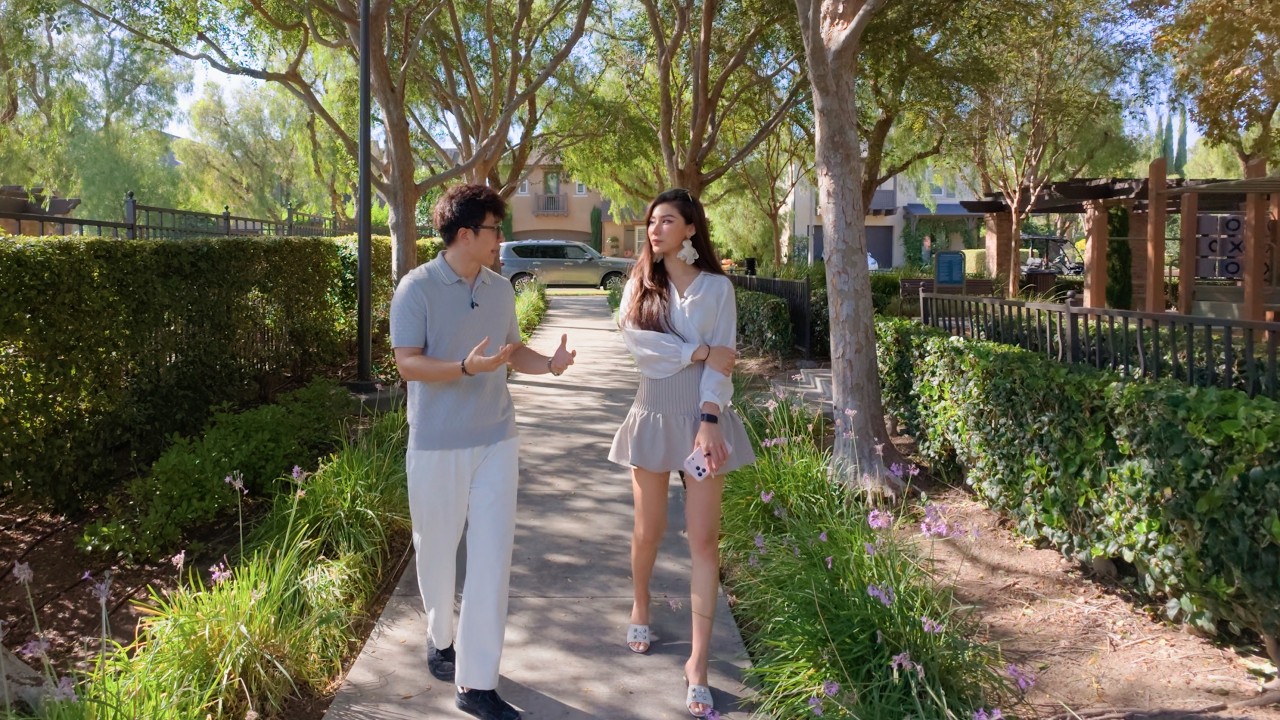
There is more than one way to find clients. Mine is mainly social media. One colleague on my team almost never appears online, and her production is just as strong. In September 2023 I visited her open house and asked her to explain how she works.
- Many transactions with one client. I work with many clients. She does many transactions with each client. Most of her clients are long-term. She knows what they want and helps them plan, much like a planner would: when to buy, when to sell, and what type of property to buy.
- Patient, long-term follow-up. New agents will not close right away. She spends two to three hours every night reviewing and following up with past clients. A buyer who did not find the right home this time, a seller who feels the timing is not right: she puts them on her calendar, waits, and keeps following up. I am not good at this myself, and I keep learning from her.
- Know your area. Preview homes on your own, even when no client is looking to buy there. If a client comes to you and you do not know the home or the neighborhood well, you may lose that client.
- Focus. She concentrates on a few neighborhoods, which the industry calls a farm, and she knows the communities and the other agents there well. When she cannot take on a case, she passes it to a teammate who is a better fit.
- Hold open houses. Many of her clients came from open houses. That was her advice to new agents, and I agree with it.
Skills, part two: related knowledge and photography
See also this video: 新时代地产经纪人必备技能 | VLOG¹⁵⁶⁵ (2026-05-13, in Chinese).
Buying or selling a home in the United States follows a transaction process, and each side has rights and obligations. The buyer has the right to do due diligence, and the seller has a legal duty to disclose. So an agent needs basic knowledge of many related fields. You do not need to be an expert, but you need to understand them.
- Law. Above all, the real estate purchase contract. If you cannot read the contract, every line may be a trap, and you cannot protect your client's interests.
- Economics. A general understanding of the economic cycle, interest rates, Federal Reserve rate moves, and local supply. It helps your client judge timing and price, and it is useful in negotiation.
- Tax. The basic rules related to real estate. The examples I gave in the video were: homeowners 55 and older carrying their property tax base to a new home, the 1031 tax-deferred exchange, and accelerated depreciation.
- Construction, interiors, design, and a sense of aesthetics.
We are not attorneys, CPAs, or financial planners. The value of knowing these things is that when you are showing a home, you can give the client a quick first read and then point them to the right professional.
The focus of this video was photography and video. Today, photos, video, and 3D tours decide whether a buyer comes to see the home at all. If the photos are crooked, or the light, angle, or focal length is wrong, a buyer will think the home is worse than it really is and may never come.
I hire one photographer for stills and a different videographer for video, but I decide how the home is shot: what its selling points are, which buyers I want to reach, which corner has the best light in the morning, where an ultra-wide lens shows a two-story ceiling, where a long lens shows depth, and where a drone is needed to show the surroundings. I sometimes revise a video six or seven times. The photographer's job ends when the shoot is delivered. The agent is the one responsible for the home.
There is one more reason. Before you can sell a home, you need a home to sell, and people need to know who you are. In the video I said that using video to share your work, your views, and your values is the best way to connect with clients today. That is my personal judgment. Some people will like you for it and some will dislike you for it. Those are two sides of the same coin.
I am one example. I entered the business about nine or ten years ago, and I was already making vlogs before that. Listings were still marketed mainly with photos then, so I brought my video experience into the work. Sellers appreciated it and referred me to their friends. Some agents thought I was not doing my real job. My view is that getting more people to know you is one of the most important parts of an agent's business.
Editor's note
This article combines five videos from 2021, 2023, and 2026, and each section reflects conditions when that video was made. The dropout statistics are what Fei Li cited in the 2023 video, and this article has not independently verified the source. The interest rate and market conditions described are those of 2022 and 2023 and may be different today. The career paths section is a 2021 summary, and Fei Li's own practice and team may have changed since then.
The tax rules mentioned here are only examples of what an agent needs to be aware of. Ask a CPA or tax advisor whether they apply to you. “The income is good” is a general statement about the industry and does not represent what any individual will earn. This article is not legal, tax, lending, or career advice.
FAQ
Do real estate agents have free hours?
There are no fixed hours and no commute, but the time is not really free. Weekends, when clients are off, are an agent's busiest days.
What should a new agent prepare for in the first year?
Prepare for a period with no income. Before you start, think through whether you have savings, other income, or family support if nothing closes in the first year.
Can you do well without social media?
Yes. A colleague on my team who almost never appears online does very well through long-term clients, steady follow-up, a focus on a few neighborhoods, and open houses.
To learn more about our team, see this page: Join Fei Li Estates.